








From Learners to Leaders Through Dell Medical School’s PEM Fellowship
Through graduate medical training, we support those who care for our youngest patients. In collaboration with Dell Medical School at The University of Texas at Austin, our USACS faculty lead an outstanding Pediatric Emergency Medicine (PEM) Fellowship. This hallmark program is affiliated with the Ascension Seton Healthcare Family, our valued partner across hospitals in the Greater Austin area.
Put simply, the experience is unmatched. To find out why, we are proud to welcome two past fellows who have since joined USACS: Joshua Farnsworth, MD, and Richard Thompson, DO. Alongside them is current fellow, Geovonni Bell, MD, who will graduate in 2026.
Equipped with their insights, we will unpack everything there is to know for prospective fellows and educators.
Our Investment in Pediatric Excellence
At the forefront of the PEM Fellowship is Sujit Iyer, MD, Program Director and National Director of Pediatric Services. He works in conjunction with Winnie Whitaker, MD, FAAP, PEM Division Director at Dell Medical School, Medical Director at Dell Children’s Medical Center of Central Texas, and Pediatric Representative for our National Clinical Governance Board. Equally influential is David Seaberg, MD, CPE, FACEP, Executive Vice President of Academic Medicine, who heads the USACS academic division. Their efforts have contributed to a robust curriculum, lasting two years for emergency residents and three for pediatric residents.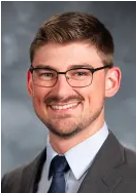
As Dr. Farnsworth explains, “Fellows are based at Dell Children’s Medical Center of Central Texas, a Level I Pediatric Trauma Center. Our other facilities consist of an Adult Level I Trauma Center and a Level III NICU. The variety of clinical environments and critical acuity cases prepare us to care for any child we encounter. We are immersed in pediatric training, teaching, research, and advocacy.”
The program is composed of several longitudinal didactic series, including surgical emergencies, toxicology, and simulation at the new high-fidelity center. While completing their shift requirements in the emergency department (ED), fellows lead resuscitations and have progressive autonomy. By their senior year, they are running the high-volume pediatric ED, with a referral area of more than 46 counties in Texas.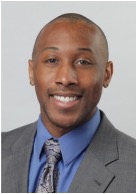
Within this scope, Dr. Bell notes, “Fellows are not forced into a mold. The education is tailored to our needs. Our faculty will ask: How can we help you pursue your passion, the thing that wakes you up in the morning? We choose our electives and research topics. We can even shadow leaders, as I have done with our administrative department chair.”
All fellows benefit from one-on-one mentorship as well. Selected by the fellow, the mentor has a bird’s-eye view of the mentee’s journey. They deliver bedside feedback and track graduation requirements. Moreover, they are a contact to navigate resources pertinent to a fellow’s progress.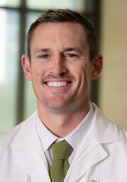
To this point, Dr. Thompson shares, “Mentorship was formative during my fellowship, and I now have the pleasure of mentoring Dr. Bell. Our goal is to ensure fellows are fulfilled personally and trained exceptionally. In addition to primary mentorship, we guide them as they build innovative learning activities for the group. It is rewarding to walk with them as they reach key milestones.”
Opportunities Beyond Hospital Walls
While maintaining a local focus, PEM fellows are encouraged to amplify their impact. Beginning closer to home, one route is the Texas College of Emergency Physicians (TCEP) Leadership and Advocacy Fellowship (TLAF). If accepted, TLAF can function as a one-year elective for PEM fellows. The Physicians here have participated, backed by USACS funding.
In Dr. Farnsworth’s words, “TLAF is an eye-opening pursuit. Fellows discover how to advocate for Physicians and patients. A central component is serving as an ex-officio member of the TCEP Board of Directors. Within quarterly meetings, we examine challenges at local, state, and national spheres. We identify tools to translate concepts into solutions.”
This knowledge is put into practice, with the ACEP Leadership and Advocacy Conference being a notable occasion. Fellows travel to Washington, D.C., to speak with legislators face-to-face. They discuss top issues in their EDs and use their specialty to foster transformation.
Echoing this sentiment, Dr. Bell emphasizes, “Fellows don’t just learn; we act. Another significant example is our role as ACEP Alternate Councillors. We assist in the resolution process by reviewing and voting on proposed policies. It is a worthwhile setting to gain a voice in TCEP and transferable skills for PEM.”
Certainly, the opportunities do not stop there. Those interested in global medicine can also team up with The Academic Model Providing Access to Health (AMPATH), through their partnership with Dell Medical School. AMPATH offers a multi-week exchange program in Kenya, with a spot for one PEM fellow per year. They teach medical students and residents, while engaging in interactive forums.
Dedicated to health equity, Dr. Thompson elaborates, “It was fascinating to explore the bilateral exchange of information as a fellow. I went to Kenya and met the Kenyan trainees hosted in Austin. Today, I supervise and conduct lectures for AMPATH. I believe this is a prime illustration of our abundant pathways, no matter a fellow’s distinct ambitions.”
A Community That Evolves With You
Upon graduation, PEM fellows set out to excel in their chosen endeavors. They are empowered by a network that lasts for life. Showcasing diverse trajectories, each Physician presents their concluding thoughts:
Dr. Farnsworth reflects, “The PEM Fellowship introduced me to the advantages of USACS and shaped my professional advancement. I am grateful to have transitioned into a Quality Director for three CHI Memorial Hospitals in Tennessee and Georgia. It has been valuable to form connections across state lines as I seek to drive clinical improvements.”
Looking ahead, Dr. Bell expresses, “Dell Medical School has been the ideal place for me to grow. Following completion of the PEM Fellowship, I plan to continue my service in the Air Force. In particular, I aim to create pediatric readiness policies for our EDs and be available to consult for critically ill children worldwide.”
Finally, Dr. Thompson affirms, “It is a privilege to stay in the Ascension Seton network, where I can give back to our fellows and residents. In a short time, USACS has afforded me many avenues to do what I love. We prioritize academics. We bring up leaders and pass the baton. I am excited to facilitate change for my colleagues and pediatric patients.”
Looking to learn more? Dive deeper into the PEM Fellowship and visit their Instagram page. To join USACS, discover all our career openings.